
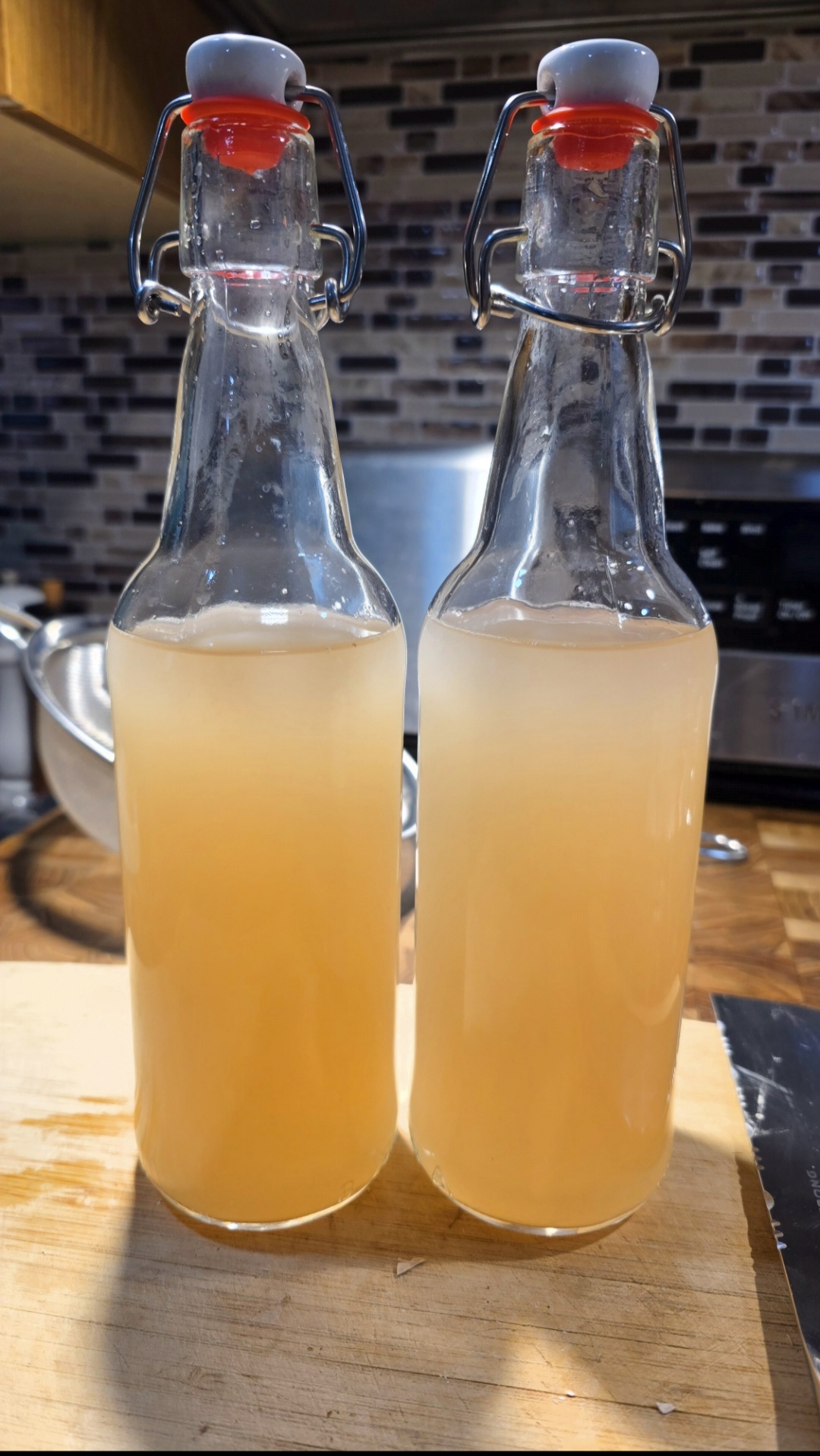
This is one of those kitchen projects that feels a little old-school in the best way. Homemade fermented ginger ale is lightly sweet, refreshing, naturally carbonated, and made with a simple ginger bug instead of commercial soda shortcuts.
It takes a little patience, but once it gets going, it’s pretty wild to watch. A few simple ingredients turn into a fizzy, probiotic-rich drink that tastes clean, gingery, and way more interesting than anything off the shelf.
I bottled mine in reusable swing-top bottles, which work really well for small-batch homemade soda and make the whole process easy to manage.
What Is a Ginger Bug?
A ginger bug is a living starter culture made from fresh ginger, sugar, and water. It captures wild yeast and beneficial bacteria naturally, which is what creates carbonation in homemade soda like this.
Think of it as the engine behind the fizz.
Ginger Bug Starter
Ingredients
- 2 cups filtered water
- 2 tbsp fresh ginger, finely chopped or grated
- 2 tbsp sugar
Daily Feeding (Days 1–5+)
Each day, add:
- 1 tbsp fresh ginger
- 1 tbsp sugar
Stir daily and keep loosely covered at room temperature, ideally around 68–72°F.
How to Know the Ginger Bug Is Ready
Your ginger bug is active and ready to use when:
- Small bubbles form on the top and sides
- The liquid looks slightly cloudy
- You hear a light fizz when stirred
- It smells fresh, gingery, and slightly yeasty
Typical ready time: 3–5 days
Maintenance
- Feed daily if keeping it at room temperature
- Or refrigerate and feed once a week
- Before using from the fridge, bring it back to room temp and feed it for 1–2 days
Homemade Ginger Ale Recipe
Yield: 2 x 16 oz bottles
Ingredients
- 4 cups water
- 1/2 cup sugar
- 2–3 tbsp fresh ginger, minced or grated
- 1–2 tbsp lemon juice (optional)
- 1/2 cup active ginger bug, strained
Equipment
- Saucepan
- Fine strainer
- Funnel
- 2 swing-top glass bottles (16 oz each)
Instructions
1) Make the Ginger Base
Combine water, sugar, and fresh ginger in a saucepan. Bring to a light simmer and let it go for about 10 minutes.
Remove from the heat and let it cool completely to room temperature before moving on. This part matters — hot liquid can kill the active culture in your ginger bug.
2) Strain
Strain out the ginger solids. Add lemon juice here if you’re using it.
3) Add the Ginger Bug
Stir in 1/2 cup strained ginger bug liquid.
4) Bottle
Pour into bottles using a funnel. Leave about 1 inch of headspace, then seal the bottles.
These are the bottles I used:
- Glass swing-top bottles – Perfect for homemade soda, kombucha, dressings, or infused oils — the airtight seal keeps everything fresh and reusable. Buy on Amazon
5) Ferment (Bottle Stage)
Leave the sealed bottles at room temperature, around 68–72°F, for 48–72 hours.
Carbonation Timeline
- 24 hours: light bubbles begin
- 48 hours: moderate carbonation
- 60–72 hours: ideal carbonation for most batches
How to Know It’s Ready
- A noticeable “psst” when opened
- Visible bubbles when poured
- A light foam on top
Refrigeration
Once it reaches the carbonation level you want, move the bottles to the fridge immediately. Chill 4–12 hours before drinking.
Important Notes
- Open slowly over the sink — pressure can build fast
- Sediment is normal (that’s yeast + ginger particles)
- Leave the last 1/2 inch in the bottle when pouring if you want a cleaner glass
Variations
- Apple Ginger Soda: Use apple juice with water + ginger bug
- Orange Ginger Soda: Use fresh orange juice with water + ginger bug
Frequently Asked Questions
How long does homemade fermented ginger ale last?
Once refrigerated, it’s best within about 1 week for peak flavor and carbonation.
Can I make it less sweet?
Yes, but don’t cut the sugar too aggressively. The sugar helps feed the fermentation and creates carbonation. You can reduce it slightly once you get a feel for your batches.
Why didn’t my ginger ale carbonate?
The most common reasons are an inactive ginger bug, liquid that was too warm when the bug was added, or fermentation temperatures that were too cool.
Is the sediment normal?
Yes. That’s completely normal in naturally fermented drinks.
Can I use regular bottles?
You can, but swing-top bottles make the process much easier and more reliable for small-batch homemade soda.